Category Archives: Maintenance

Swimming Pool Shocking: Frequency and Waiting Times

In part one of this multi-part blog series, we went over some of the initial basics on “shocking” a swimming pool. Referring to a product and a process where chlorine and other chemicals are used to clean and sanitize the water in a pool, shocking — also called superchlorinating — kills off numerous contaminants, including bacteria, algae and others.

At Packman’s Pools, we’re here to not only offer high-quality swimming pool construction and design services, but also to help our clients maintain and care for their pools for years into the future. Today’s part two of our series will go over how frequently you should be shocking your pool, plus a couple other important areas to be aware of.

swimming pool shocking frequency

Pool Shocking Frequency Recommendations

As you may have guessed, the specific answer to the question of how often you should shock your pool depends on a number of factors. These will include how often the pool is used, who uses it, how often the pool sees rain or other weather events, and possibly other issues.

Generally speaking, though, we recommend shocking the pool about once every one or two weeks during primary swim season. In addition, those who own pools that get regular use during the summer can also purchase test kits that will let them know when it’s time to shock their pools.

In addition, the pool should be shocked when it’s first opened up for the spring after a winter of inactivity, and when it’s closed down in the fall for the winter. Failing to shock a pool during these times can lead to contamination and other problems, so we recommend taking action even when you don’t see any contaminants in your water.

How Soon Can I Swim After Shocking?

Once again, the answer here depends — in this case, primarily on the type of pool shock being used (we’ll go over this in more detail in part three of our series). Generally speaking, though, different pool shock products will list the required waiting time on their labels so that the product can work effectively.

In our experience, though, most pool shock products will require a waiting period of about two to four hours before swimming once they’re applied to the water in the pool. Some types of pool shock, particularly calcium hypochlorite-based shocks that are designed to be used with pools having low calcium hardness levels, may require up to 12 hours. If you’re not sure about the waiting time for your particular type of pool shock, it’s best to check with the manufacturer or your local pool professional before swimming. And in many cases, we recommend adding an hour or two to the advised time, just to be safe.

For more on swimming pool shocking, or to learn about any of our swimming pool design or construction services, speak to the pros at Packman’s Pools today.
Swimming Pool Shocking: Basics and Timing

There are a few concepts that pool owners will be considering as they look to maintain their swimming pool and keep it clean, and one of these is pH balance. Between chlorine and other chemicals that may be involved in sanitizing your pool and its water, it’s possible for pH levels to get out of whack — and one process that may be used to remedy this situation is known as shocking the pool.

At Packman’s Pools, we’re here to assist clients not only with the planning and design of a fantastic swimming pool, but also with important themes for cleaning and sanitation. What exactly is shocking a pool, what happens when you shock your pool, and when and how should you be going about this process? This multi-part blog will go over everything you need to know.

swimming pool shocking basics timing

Pool Shocking Basics

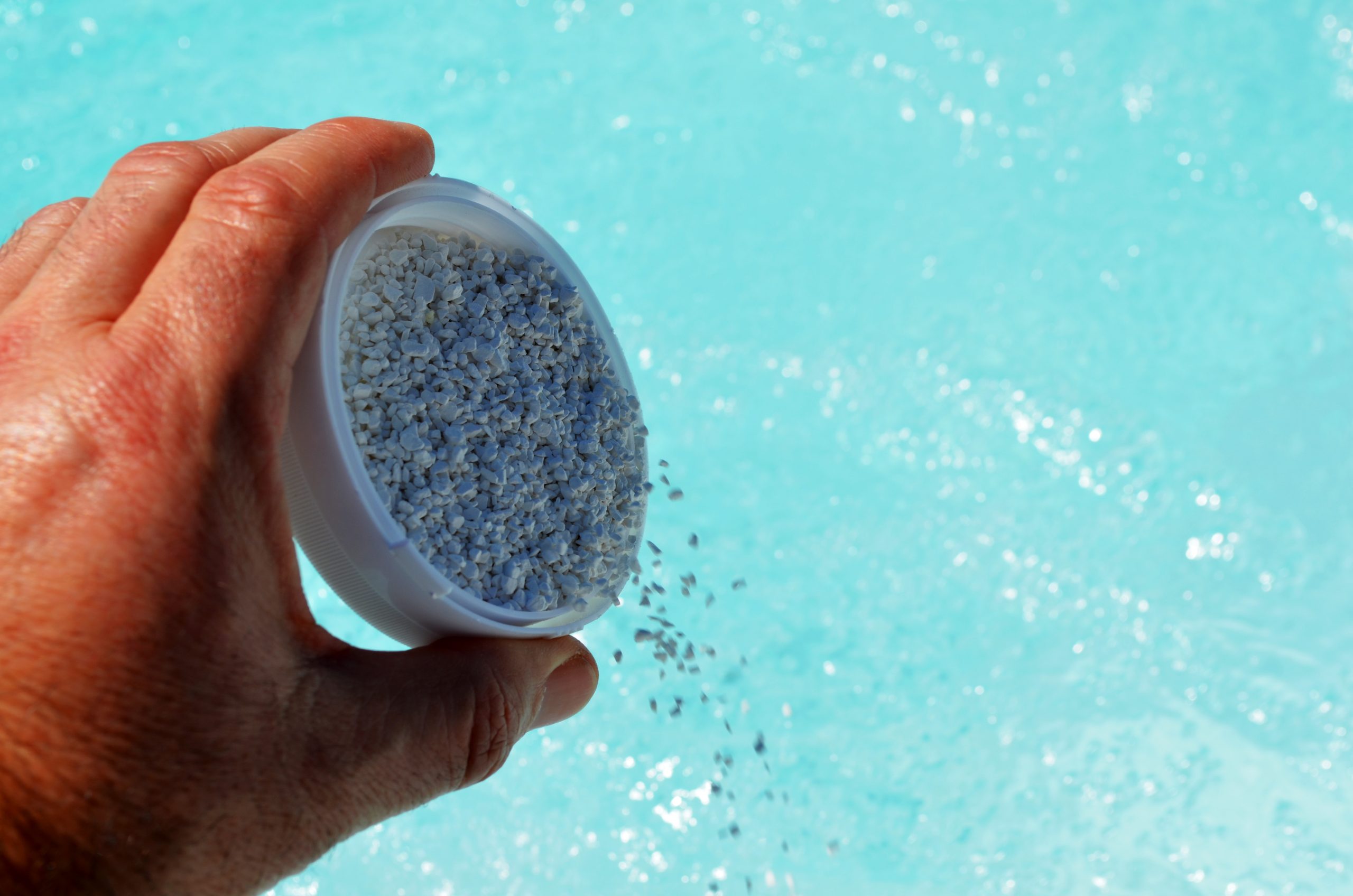
The term “pool shock” refers to both a product and a specific process. The product in question is typically a form of chlorine, or other chemicals that are used to clean or sanitize the water of your pool. The process is known as superchlorinating, and it helps to shock the water of your swimming pool into a state where chlorine levels are increased for a short period of time.

This allows the pool to be properly cleaned from top to bottom, killing off any bacteria, algae, and other contaminants that may have accumulated. If your pool is not superchlorinated enough or with the correct form of chlorine, it can cause problems in the long run.

What Pool Shock Does to Your Pool

When you apply shocking products to a pool, its job is to fight off chloramine and other contaminants that may have made their way in. In addition, it will also heavily increase the levels of “free chlorine” in your pool water. This is an important distinction, because it’s not the same thing as free chlorine levels in isolation.

When you shock your pool, two actions will take place: 1) It will destroy organic compounds that are responsible for chloramine formation; 2) It will oxidize nitrogen compounds into harmless nitrate particles. This helps to get rid of contaminants that can’t be completely removed by normal chemical sanitization, but that will eventually cause problems in the long run.

In addition, this process will turn harmful chloramine into a gas, which will evaporate into the atmosphere.

Timing for Pool Shocking

If you’ve decided it’s time to shock the pool (more on shocking frequency in part two of our series), the ideal time tends to be at night. This is for one primary reason: Chlorine can be neutralized by UV rays from the sun, meaning you’ll have to add more chlorine within a few days.

However, the pool water won’t be exposed to direct sunlight during this process if you do it at night, and with no UV rays or wind around, it’ll allow for maximum chlorine action.

For more on shocking a pool, or to learn about any of our swimming pool products or services, speak to the staff at Packman’s Pools today.

SLC Pool Frog Prevention: Fencing, Covering, Pool Floats

In part one of this two-part blog series, we went over some basics on how to keep frogs and other small animals away from your swimming pool. While these creatures aren’t directly harmful to humans, they can carry diseases around and are also commonly an annoyance for those who spend lots of time in the pool area.

At Packman’s Pools, we’re happy to offer a wide range of expertise and assistance themes for any of our swimming pools or custom spas in Salt Lake City. Have you noticed a greater presence of frogs or any other smaller water-adjacent creatures in or around your pool area? Here are some general tips on helping minimize their presence without hurting them or inconveniencing yourself.

pool frog prevention fencing

Barrier Fencing

Fencing is another good option when it comes to keeping animals away from your pool, but you want to ensure you go with the right fencing type here. Standard slat wooden fences, for instance, won’t do much to keep frogs or other small animals out of your pool. Most likely, they’ll be able to scurry right through the slats before you know it.

High-density polyethylene pipes are a much better choice for fencing, since they’re more solid and ensure that little creatures won’t be able to squeeze their way through.

Pool Covering

Covering the pool when it’s not in use is valuable for several reasons, and prevention of animal incursion is one of them. Covering the pool keeps it clean and ensures that there are no stray leaves or other debris potentially falling into your water. It also helps keep out any frogs, snakes, birds, mice, wasps, mosquitos, bees, toads and other small creatures whose presence could pose a problem for you or your loved ones.

When purchasing a pool cover, look for those made of strong material like PVC. They also act as insulation when the weather is cooler, helping reduce how often you’ll want to heat or otherwise use your pool.

Pool Floats

Frogs are considered prey animals, meaning they have protective instincts that will tell them to stay far away from anything they perceive as a predator. For this reason, you may consider placing scary-looking pool floats around the perimeter of your pool. For instance, prop one or two inflatable alligators around to deter any frogs from getting too close to the water.

You might also consider placing a scary-looking toy shark in the pool. In reality, small amphibious creatures have no reason to fear them – but they’ll still give off an air of danger to any frog or other small animal, and they won’t want to come near them.

For more on how to keep frogs and other small animals away from your pool, or to learn about any of our swimming pool design or construction services in Salt Lake City or any other part of Utah, speak to the team at Packman’s Pools today.

Swimming Pool Heater Basics, Needs and Types, Part 2

In part one of this two-part blog series, we went over some of the basics on the various pool heaters and related items available for your new swimming pool. Even in warm summer locations like Utah, water temperature will not always match the outdoor temperature, and in fact will often be a lot cooler – which is why many pool owners choose to install a heating component.

At Packman’s Pools, we’re happy to discuss heating elements and your options within this realm during any of our custom swimming pool design and construction planning sessions. During today’s part two of our series, we’ll dig into a couple other pool heater types available to you if you’re going down this road, plus how to choose the proper size for your heater.

swimming pool heater basics types

Electric Heat Pump

Slightly different from other heating formats, electric heat pumps work by pulling in heat from the air and transferring it into the pool’s water. This is done in a similar format to solar heaters, allowing for strong energy efficiency and better environmental friendliness than gas heater types.

Generally, electric heat pumps are very inexpensive to operate – between $50 and $100 a month in most cases, one of the most cost-effective options. They do come with a higher installation and up-front cost, often ranging from $2,000 all the way to $7,000 or higher for certain custom models, but this value is realized over years of efficient use and low operating costs.

One note: In areas that sit below 55 degrees Fahrenheit during the summer, electric heat pumps might not be an option. They generally require air temperature of at least 55 degrees to operate.

Gas Pool Heater

For those who live in cooler climates or want the fastest possible pool heating, gas pool heaters are usually the way to go. These models are not as energy-efficient, which is a big downgrade for some but might not be as large a concern to others.

Gas heaters cost far more to operate than other types, usually between $300 and $500 per month due to the need for gas power. Installation and up-front costs may be cheaper, but the expenses add up over a period of months or years. Gas heaters also may have a shorter lifespan than other heater types.

Choosing Proper Size

No matter which of the options we’ve listed here you end up choosing, pool heaters will be sized based on British Thermal Units, or BTUs. The greater number of BTUs your heater is rated for, the faster it can heat your pool – this means larger pools require higher BTU ratings, generally.

In most cases, pool heater output should be rated for 50,000 BTUs for every 10,000 gallons of water present in the pool. If your pool holds 40,000 gallons of water, then, your heater’s BTU output should be at least 200,000.

For more on choosing the ideal pool heater for your new swimming pool, or to learn about any of our pools or custom spa builders, speak to the staff at Packman’s Pools today.

Basics on Automatic Pool Chlorinator Equipment, Part 1

As most who have owned or even spent significant time in a swimming pool are well aware, chlorine is the most common chemical used for basic pool sanitation and cleanliness. And while those in previous generations often had to pour their own chlorine in what could be a labor-intensive process for many pools, modern technology has brought us several assists here – and the most popular of these is known as the automatic pool chlorinator.

At Packman’s Pools, we’re happy to explain any part of our swimming pool planning and design processes to clients, including those who desire an automatic pool chlorinator as part of pool construction. This two-part blog will dig into everything you need to know about these items, from what they do and how they work to the types available and some important considerations as you determine whether or not to install one.

automatic pool chlorinator equipment

Automatic Pool Chlorinator Basics

As the name implies, an automatic pool chlorinator is an item that’s put in place to automatically dispense chlorine throughout a swimming pool. This comes in place of pouring your own chlorine, an imprecise and often labor-intensive process.

It’s important to note that there’s a difference between an automatic pool chlorinator and a chlorine generator. The former, which we’re discussing in this series, simply dispenses chlorine, while the latter actually creates it.

How They Work

In the majority of cases, an automatic pool chlorinator will plug directly into your pool’s pump and filter system. When water moves through this system and is returning to the pool, it will be infused with the proper amounts of chlorine by this piece of equipment. All you have to do is ensure you purchase the proper chlorinator type for your pool, which tends to depend on whether the pool is in-ground or above-ground.

Chlorine Type Options

Starting with the very simplest option, here are the types of automatic pool chlorinators you’ll be able to choose from:

  • Floating chlorinators: Simple plastic items that can hold roughly three pounds of chlorine tablets, the floating chlorinator is loaded up and then placed in the pool, where water passes through it and dissolves the tablets over time. These are cheap and easy to replace, though they are not precise and require regular manual change-outs.
  • Tablet chlorinators: Options that use a plastic canister to hold tablets, with connections to the pool’s plumbing. These come with a control knob that allows you to change how much chlorine is being put out.
  • Salt chlorinators: As we noted earlier, certain products in this realm cross over into chlorine generation, and the salt chlorinator is a good example. Through salt cells, this piece of equipment actually creates its own gentle form of chlorine, automating the entire process. As you might imagine, these full-service items come at a bit higher cost.
  • Automation: There are still other systems that have actual sensors in place, allowing them to automatically adjust their own chlorine output levels based on the water’s needs.

For more on the kinds of automatic pool chlorinators available today, or to learn about any of our swimming pool or custom spa construction services, speak to the staff at Packman’s Pools today.

How a Swimming Pool’s Filtration System Works, Part 2

In part one of this two-part blog series, we went over some of the primary components included in a swimming pool’s filtration system. This system, which is vital for keeping pool water clean and safe to swim in, is one of the primary areas you’ll have to think about when it comes to maintaining a new swimming pool.

At Packman’s Pools, we’re happy to help you understand the filtration options and details for any of our custom swimming pool construction projects. In today’s blog, we’ll go over a few of the additional components of a standard pool filter, and the important factors to know for each of them.

swimming pool’s filtrations system

Filters and Microns

We discussed the different types of specific filters that may be used in a swimming pool in part one, and this section is an add-on to that. One important element of any pool filter refers to the size of debris and contaminant it can catch and remove – within filters, this measure is done using “microns,” or millionths of a meter. Here are the general size that certain contaminants generally sit at, measured in microns:

  • Human hair strands: 50 to 100 microns
  • Household dust particles: 4 microns
  • Pollen particles: 30 microns
  • Bacteria: 2 microns or less

As you may have guessed, the lower the micron level a filter catches, the more completely it will filter your water.

Salt Chlorine Generator

One note here: If the pool you purchase contains a traditional chlorine system rather than a salt system, you can skip this section and move on. In saltwater pools, however, salt is added to the filter, which converts it to chlorine.

Salt chlorine generators are necessary in these cases, containing both a cell and a control board for operation. The cell connects to water pipes, while the control board sits in a separate location. When filtered water enters this cell, a group of grids and an extremely low electrical current converts the salt within it to bubbles of chlorine, which reacts with the water to form a cleaning acid.

Heater

Pool heaters often have a big job, and they come in a few different styles:

  • Electric heat pumps (many of these come with chiller features for those in warmer climates)
  • Natural gas or propane heaters
  • Solar heaters

Generally speaking, heat pumps are by far the most common form of heater chosen. They’re affordable to operate and durable, lasting for many years without significant maintenance needs.

Return Jets

Finally, the pool’s filtration system contains return jets, which as the name suggests are in charge of returning filtered water back to the swimming space of the pool. Within a spa, these would be called spa jets.

For more on the components of a pool filtration system, or to learn about any of our custom swimming pool builder services, speak to the staff at Packman’s Pools today.